
Lowndes County Arrest Warrants Explained
Georgia law lets a judicial officer issue an arrest warrant once probable cause is shown. In Lowndes County, that job belongs largely to Magistrate Court. Its criminal division issues arrest warrants after a probable-cause finding, and it also runs pre-arrest warrant hearings, first appearances, bond hearings, and preliminary hearings. Those duties make Magistrate Court a practical first contact. It is not a public roster, though. The warrant itself is a command. It directs the sheriff or another authorized officer to arrest the named person and bring that person before a judicial officer. So a Lowndes County warrant check still has to go through the court and the Sheriff's Office directly, since neither publishes a list of names. What the proceedings later decide about the charge is a separate matter for the court.
Lowndes Magistrate Probable-Cause Review
A sworn applicant, or affiant, presents the facts claimed to support an offense. The judicial officer then weighs the application under O.C.G.A. §§ 17-4-40 through 17-4-46, and issues the warrant in the prescribed form when the law allows it. Lowndes County also publishes a pre-arrest warrant application route and lists pre-arrest hearings among Magistrate Court duties. Remember that an application is not a warrant. Only a signed judicial command is. To learn where a Lowndes County arrest-warrant matter stands, call Magistrate Court at 229-671-2610. The court sits at 327 N. Ashley Street, second floor, open weekdays from 8 a.m. to 5 p.m. Staff can explain records and procedure. They cannot replace advice from counsel. The county forms index lists the pre-arrest warrant application itself. That filing starts a request for judicial review, nothing more. When you ask, be specific about the stage: an application only, a scheduled pre-arrest hearing, a signed command, a service return, or a later disposition. Each stage answers a different question about a Lowndes County warrant.
Inside a Lowndes County Arrest Warrant
Lowndes County publishes no sample warrant for public inspection. Georgia's warrant provisions still spell out the details a requester may ask the record holder to confirm.
| Warrant identifier | Court-assigned number connecting process to a file |
|---|---|
| Person named | Identity stated in the judicial command |
| Affiant and facts | Sworn source and allegations supporting probable cause |
| Offense | Charge or statutory description alleged |
| Issuer and date | Judicial officer, county, and date |
| Command | Direction to arrest and bring the person before a judicial officer |
| Status | Active, served, returned, recalled, or another court term |
Even so, a releasable Lowndes County record may not show every field, since sealed material and active-investigation limits can restrict access.
Clerk Routes for Lowndes Warrants
The Clerk of Court directory names Beth Greene's office as the Lowndes County contact for Superior and State Court records.
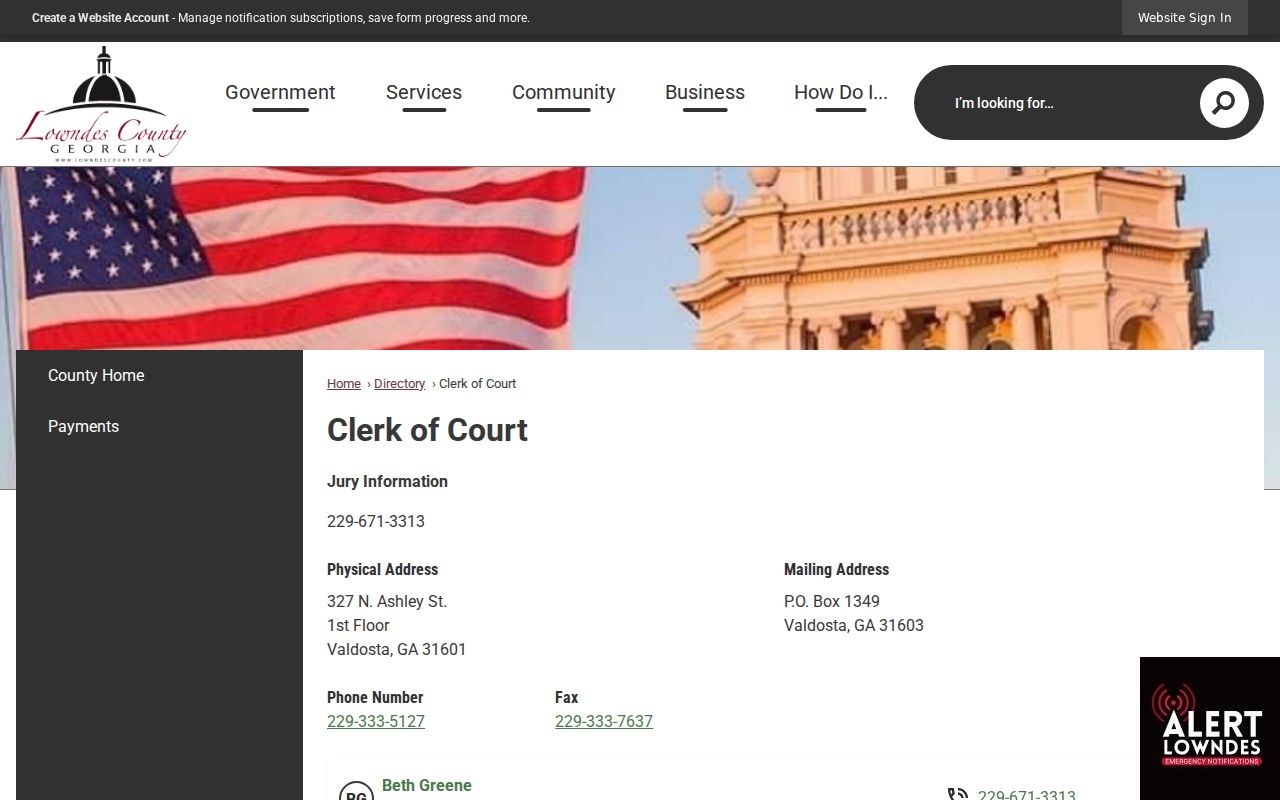
That directory distinguishes the court clerk from the administrative County Clerk. It matters. Superior and State Court records sit at 327 N. Ashley Street, first floor, reachable at 229-333-5127. Magistrate Court keeps its own clerk, Dana Spell, one floor up on the second floor, so know your court and case type before requesting anything from Lowndes County.
Serving Arrest Warrants in Lowndes County
The Lowndes County Sheriff's Office splits warrant work across several units. Patrol deputies serve warrants and other court papers. Court Services secures courthouses, transports prisoners, and handles process and returns. Administration keeps the records. Special Operations covers fugitive apprehension. None of this tells you whether any particular person has an active warrant right now. For that, call the sheriff's main number, 229-671-2900. A 2017 official packet listed a separate warrants number, but a listing that old should not be trusted as today's line. Ask the main office for the current confirmation procedure. The sheriff contact form has a Warrants option, though it routes messages rather than searching names. When you call, keep law-enforcement status and the court docket separate. Ask whether process remains active, whether a return has been filed, and which court can confirm the next appearance or bond decision. A Lowndes County sheriff answer about service is not the clerk's record of recall, and a clerk entry may take time to reach the serving agency.
Superior Court and Felony Warrants
The official Superior Court page identifies the felony trial-court route.
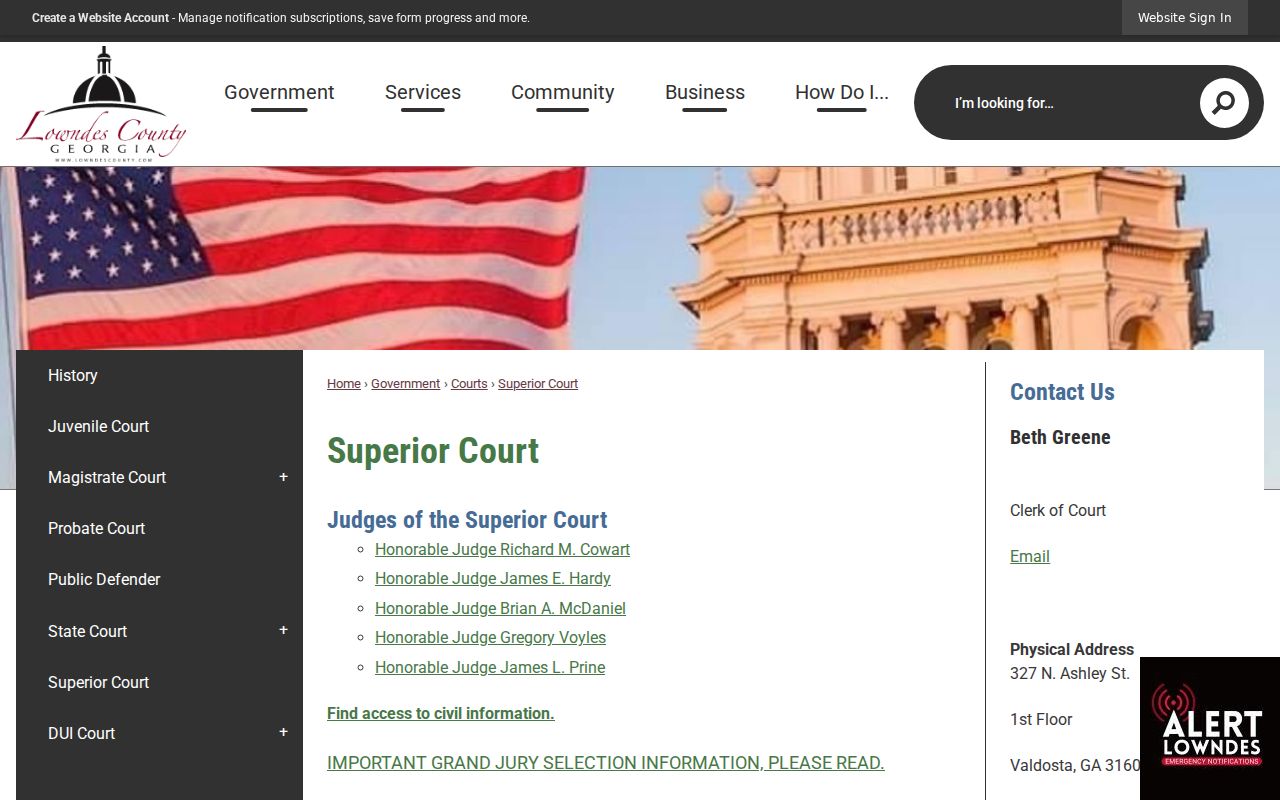
An arrest warrant may start in Magistrate Court while the felony case later moves through Superior Court. That does not make the two Lowndes County offices interchangeable. Ask Magistrate Court about issuance and early hearings. Ask the sheriff about operational status. Ask the Superior Court clerk about the later criminal docket. Follow the actual court, and do not assume one database holds the whole history.
Comparing Lowndes County Court Process
Each Lowndes County instrument calls for a different response. Confirm which document you face before deciding to appear, surrender, request a recall, or show up on a stated date.
| Process | Basis | Direction | Response |
|---|---|---|---|
| Arrest warrant | Probable cause | Custody and appearance | Legal advice and planned surrender |
| Summons | Filed matter | Appear voluntarily | Attend as directed |
| Bench warrant | Missed duty | Return to court | Ask about recall, reset, or bond |
A search warrant, by contrast, authorizes a search for evidence. It is not a Lowndes County public search for a person's arrest status.
State Court Arrest Warrant Records
The Lowndes County State Court page lays out the criminal and traffic court route served by the Clerk of Court office.
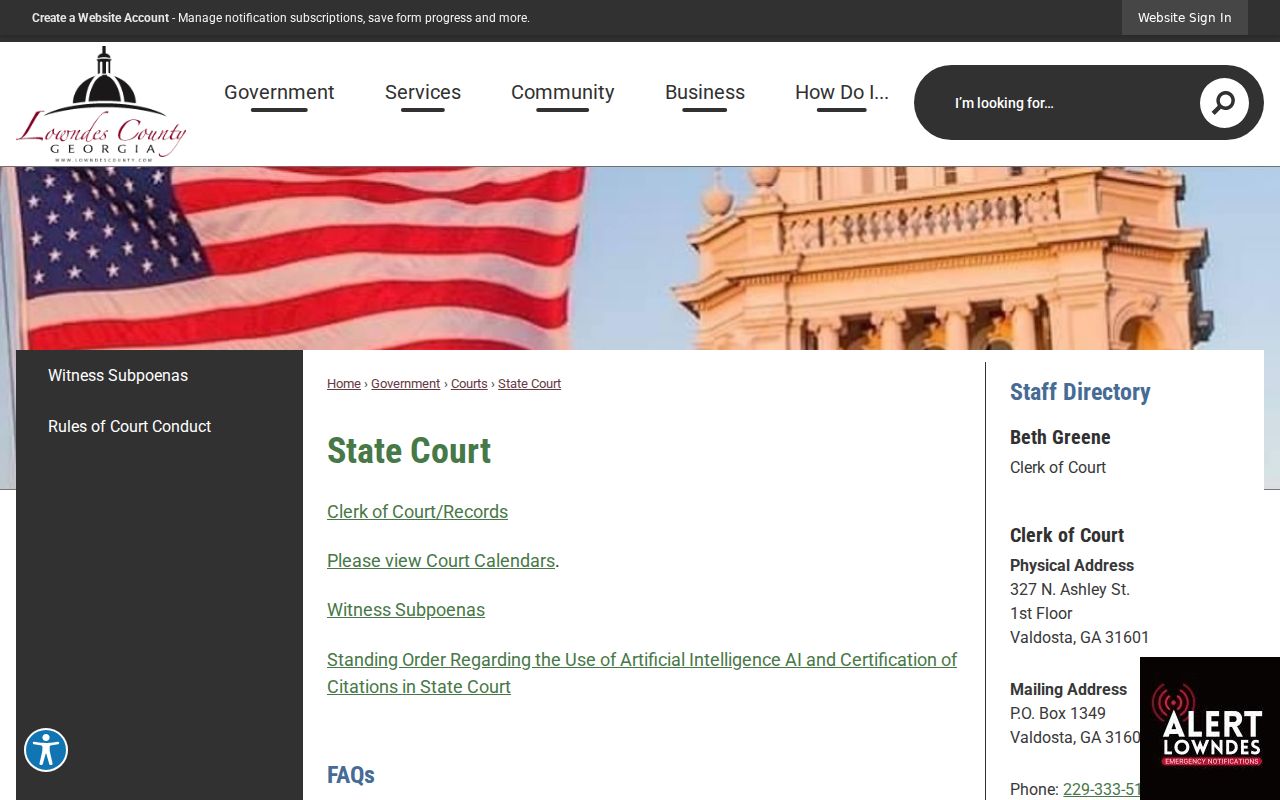
That page shows why the issuing-court name matters in Lowndes County. A State Court case will not surface if you assume every warrant stays in Magistrate Court. Ask the clerk for docket status, court dates, and releasable filings. Then ask the sheriff separately when you need operational warrant confirmation.
Pre-Arrest Application or Warrant
Lowndes County gives residents a formal path that runs ahead of any arrest. The county's forms index carries a pre-arrest warrant application, and Magistrate Court posts pre-arrest warrant hearings on its calendar. Filing one merely asks a judge to look. It does not establish that an arrest warrant was ever issued. At the hearing, the judge can weigh evidence and apply Georgia procedure before choosing the right process.
If a Lowndes Arrest Warrant Names You
Pick up the phone first. Call the Lowndes County sheriff and the issuing court to confirm the warrant, the alleged charge, the court, the date, the status, and the next official step. For a serious allegation, get a lawyer before you appear. The Lowndes Public Defender lists 229-671-2800, though that office only decides eligibility and holds no warrant-status records.
Plan before appearing: A courthouse or sheriff visit may lead to custody when an active arrest warrant exists, so seek legal guidance first.
Ask about a planned surrender, bond, and first appearance. Also ask what court motions might apply. Use an official court or an authorized bond route, never an unsolicited service, and see the Lowndes County warrant records overview for the wider court-and-sheriff process.
Written Lowndes Arrest Warrant Requests
When phone staff point you to records, keep the request narrow. A good written request asks for enough records to confirm whether you have a Lowndes County arrest warrant and, if releasable, the issuing court, issue date, alleged offense, status, and court contact. The Sheriff's Office Records Request Form is built mainly for incident and booking reports, so do not call it a warrant certificate. Georgia Open Records Act access also never forces an office to build a new warrant roster.